
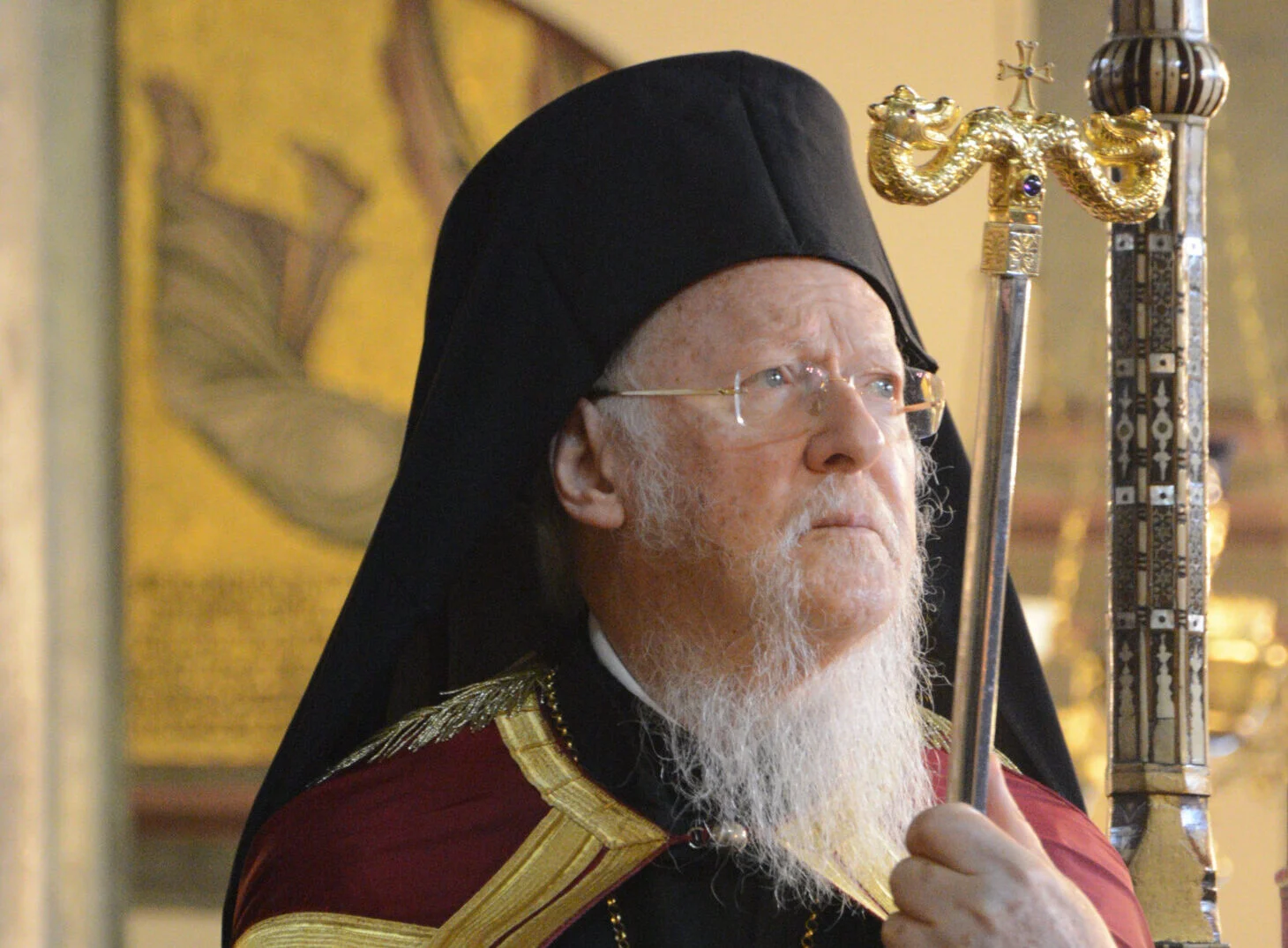
His All-Holiness Ecumenical Patriarch Bartholomew, the spiritual leader of 300 million Orthodox Christians worldwide, has been named the recipient of the 2025 Templeton Prize. The honor recognizes his decades-long efforts to unite science and faith in advocating for environmental stewardship as a spiritual responsibility.
The announcement was made on April 10 by the John Templeton Foundation, which administers the award in partnership with two affiliated institutions.
For over three decades, Bartholomew has emphasized the moral imperative to protect the Earth, urging people of faith to see care for creation as a sacred duty. He has long warned against drawing false boundaries between the spiritual and material worlds—arguing that doing so can obscure the ethical consequences of environmental degradation.
“Bartholomew is receiving the Templeton Prize for making care for the environment a central commitment in his role as a spiritual leader,” said Heather Templeton Dill, President of the John Templeton Foundation. “This is harnessing the power of the sciences to expand our collective understanding of humankind’s place and purpose in the world.
“Bartholomew has also deepened Christians’ ideas of what it means to be faithful in the world today. It involves caring for all aspects of God’s creation including the people around us and the natural world in which we live.”
Since assuming the role in 1991, Bartholomew has convened global religious and scientific leaders, urging them to address ecological issues. Through initiatives such as the five Halki Summits and eight Religion, Science and the Environment symposia, he has sought common ground among scientists and people of religious faith to respond to the ecological crisis, helping shape the global discussion on climate change, biodiversity, and ecological justice. Bartholomew notably introduced a new category of sin—the concept of “ecological sin” in 1997. This framing of environmental harm as a moral failure was later echoed in Pope Francis’ Laudato Si’.
“We are not owners of this planet,” said Bartholomew in an interview for the Templeton Prize. “It belongs to the coming generations as well. We are simply stewards and priests of the environment and not proprietors of it.
“Ecology is not a political or economic issue. It is mainly a spiritual and religious issue because God created and gave it to us to protect it, to cultivate it, to use it, but not to abuse it. This is the spiritual dimension of ecology,” Bartholomew observed.
“I see that we have a common ideal, a common purpose. Maybe our methods are diverse, but the final goal of all of us is to save our planet, to create better conditions of life for the inhabitants of this planet, which is our common home, our ecos. This is a Greek word, which means ‘home,’ and ecology is the science about our home. We complete each other, scientists and media and local administrators and theologians and priests and bishops—we complete each other in order to serve this common ideal.”
Bartholomew also believes that the world needs metanoia, or repentant conversion from the self-centered, materialism of today.
Ecumenical Patriarch Bartholomew joins a list of 54 recipients of the Templeton Prize, including St. Teresa of Kolkata (who received the inaugural award in 1973) and the Dalai Lama (2012). Other religious leaders who have received the Templeton Prize include Rabbi Lord Jonathan Sacks (2016) and Archbishop Desmond Tutu (2013).
Read the full press release for Bartholomew’s awarding of the 2025 Templeton Prize here.