
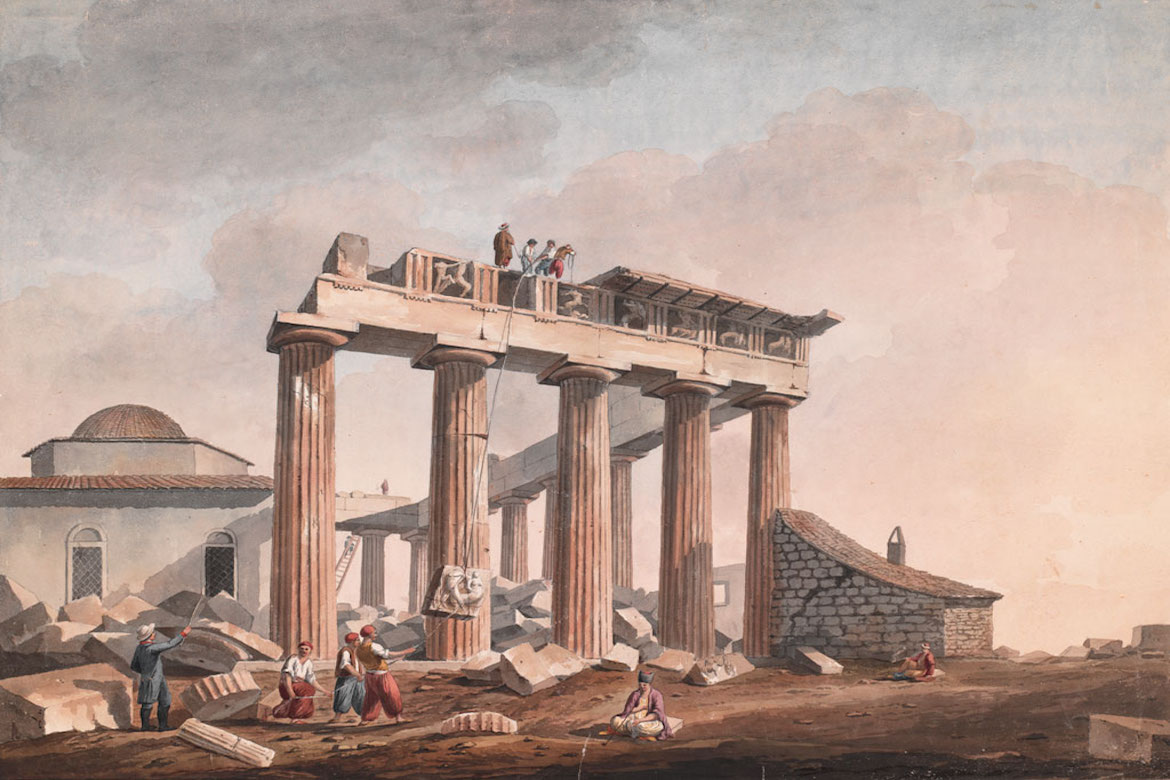
The rape of the Parthenon began more than two centuries ago on July 31, 1801, as the Scottish-born Lord Elgin began dismantling the statues that had adorned the temple unviolated for thousands of years.
Elgin, acting on the approval of the Ottoman authorities which occupied Athens at the time, stripped the temple of the statues, known as the Parthenon Marbles.
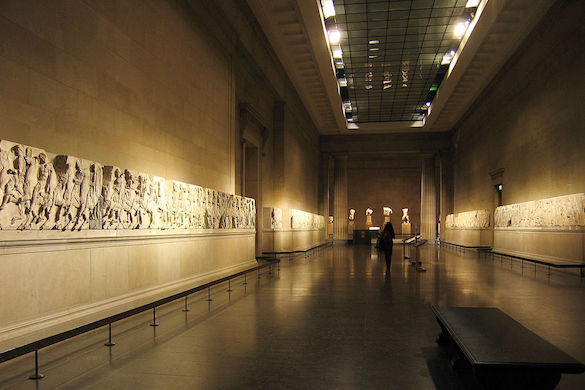
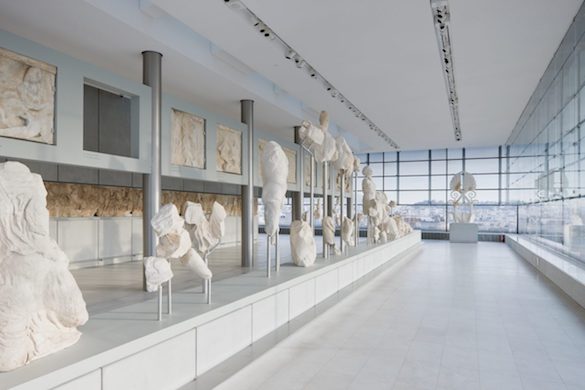
Today, they are on display in the British Museum in London, while the Acropolis Museum in Athens holds a space for them in hopes of their eventual repatriation.
Parthenon Marbles Casts in New York City
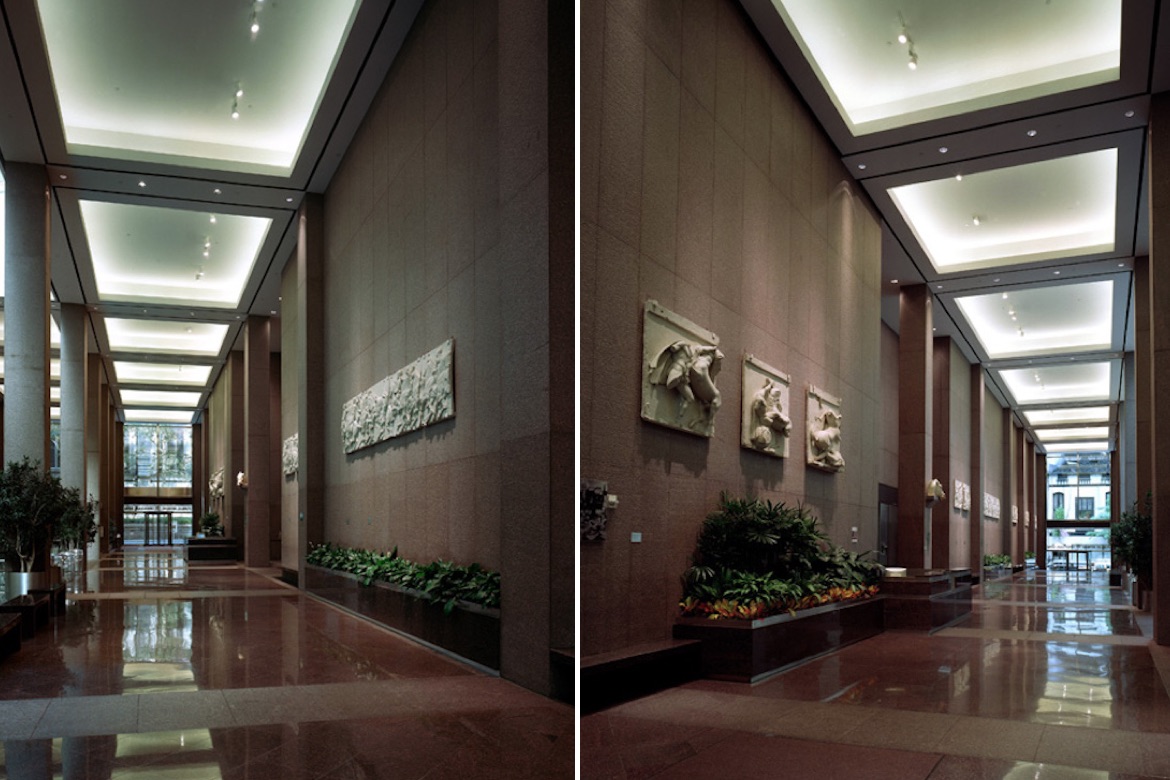
The Parthenon Marbles Cast Collection is on display in the public atrium of Olympic Tower in Manhattan (645 Fifth Avenue), City College of New York.
The collection was acquired in 1852 and was one of the first sets of Parthenon Marbles casts to come to the United States.
Although incomplete, the casts served as an important educational function in the university’s art classes for more than a century.
In 1992 the casts were placed in storage, awaiting necessary restoration until 1999, when the Alexander S. Onassis Public Benefit Foundation (USA) provided the necessary funds for the project — completed in the summer of 2000.
The casts on display are on the loan from the City College of New York. They are direct copies made from the molds of the original marble sculptures once adorning the Parthenon, the supreme monument of Greek antiquity and one of the greatest symbols of Western civilization.
The featured image at the top of this article depicts the removal of sculptures from the Parthenon by Lord Elgin’s men, after 1801. Painting is by Edward Dodwell and/or Simone Pomardi; watercolor. (Source / The Packard Humanities Institute)