If you ever find yourself in Eastern Macedonia in early January, there is one village where time seems to bend and tradition takes center stage. Nestled at the foot of Mount Falakro, Petroussa hosts an annual celebration unlike any other: Babiden. From January 6th to the 8th, the entire village transforms into a living stage where music, costumes, laughter, and centuries-old symbolism merge into three unforgettable days.
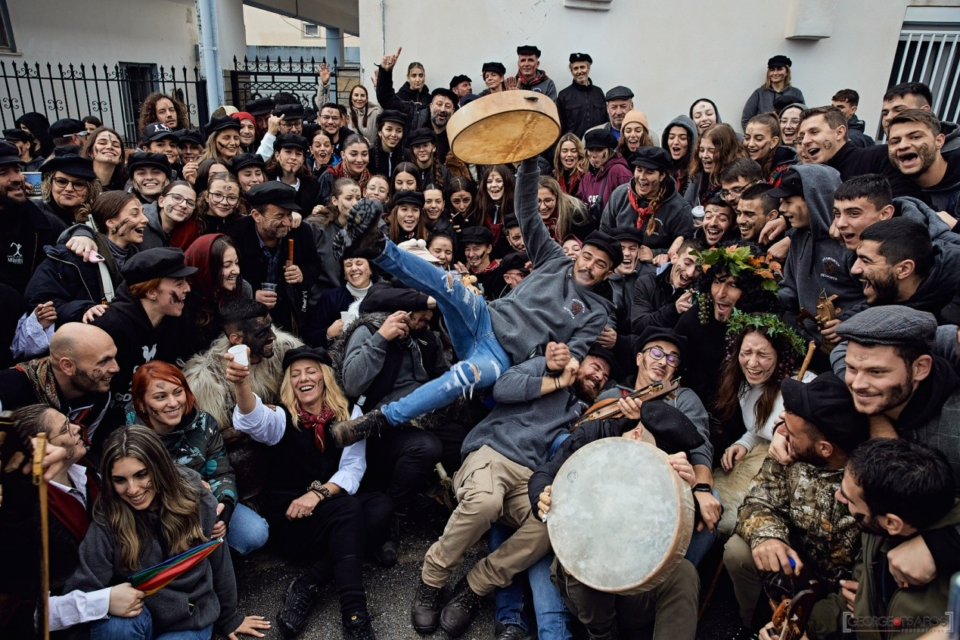
Locals often say, “Half the year we talk about the Babiden that has passed, and the other half about the one to come.” And they mean it. For the people of Petroussa, Babiden is not just another festivity. It is the highlight of the year, a cultural heartbeat where everyone—young and old, residents and visitors—comes together as one big family.
Even the word Babiden carries with it layers of history. One interpretation traces its roots to the Slavic words babbo (grandmother) and den (day), meaning “the day of the grandmother,” a nod to the midwife who once assisted women in childbirth. Another story dates back to the early 20th century, when the Bishop of Drama visited the celebration, enjoyed himself so thoroughly that he granted permission for the festivities to continue one more day—this time with women included. A third explanation combines Turkish and Slavic linguistic elements, interpreting Babiden as “from the time of the grandmothers,” a poetic way of saying “since ancient times.”
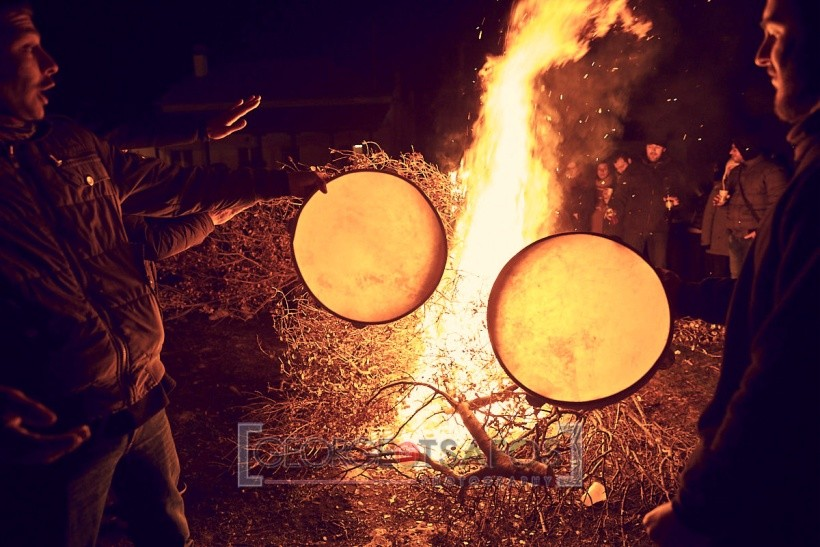
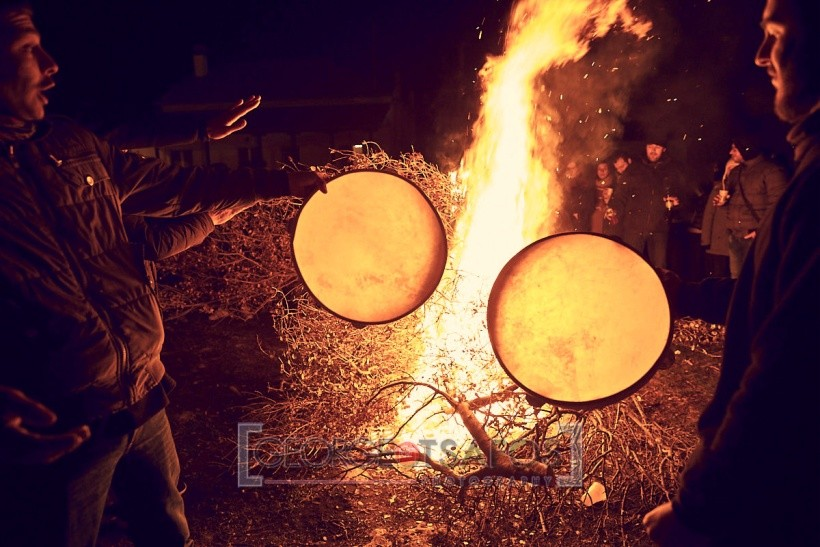
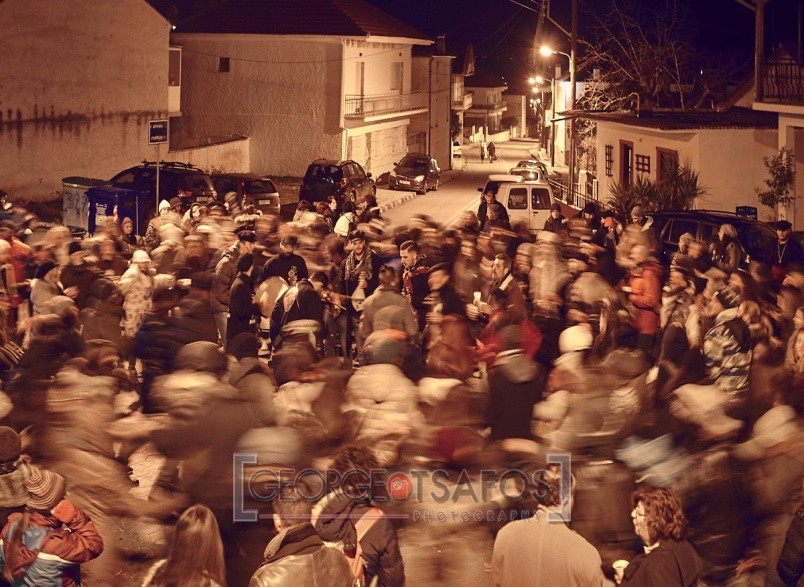
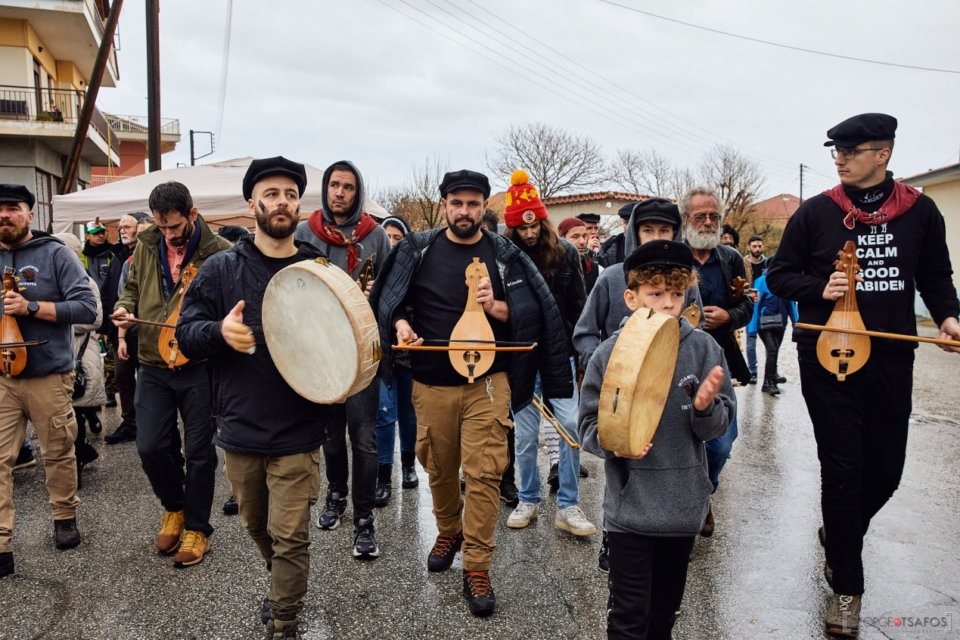
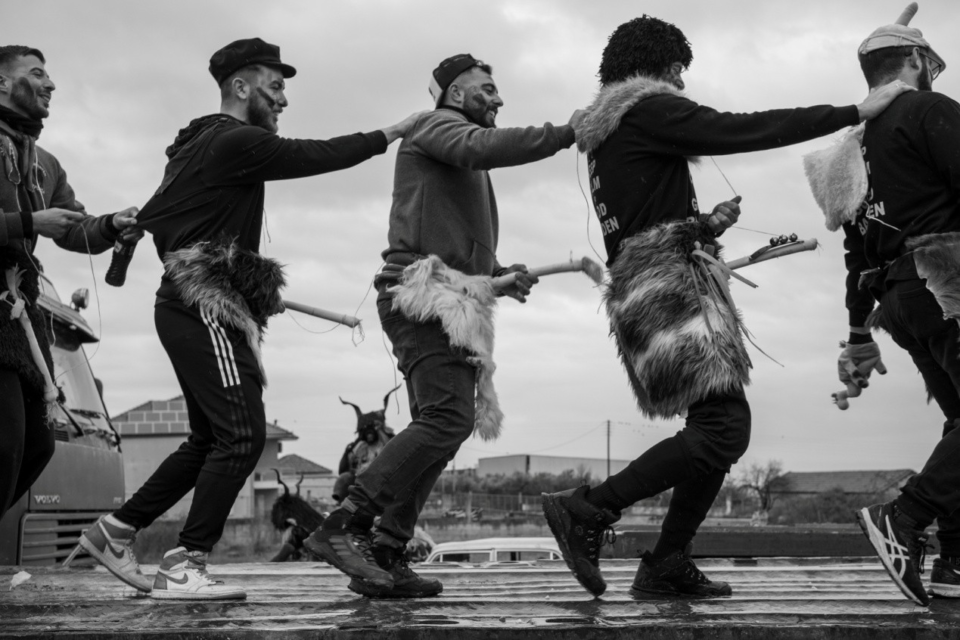
As you walk through the streets of Petroussa during these days, you’re immediately swept up by the atmosphere. The sharp notes of the Macedonian lyra and the rhythmic beat of the dahare (a local drum) fill the air, inviting everyone to dance. At the heart of the celebration is the Leventikos, a traditional circle dance that expands to welcome everyone—locals, guests, children, and elders alike.
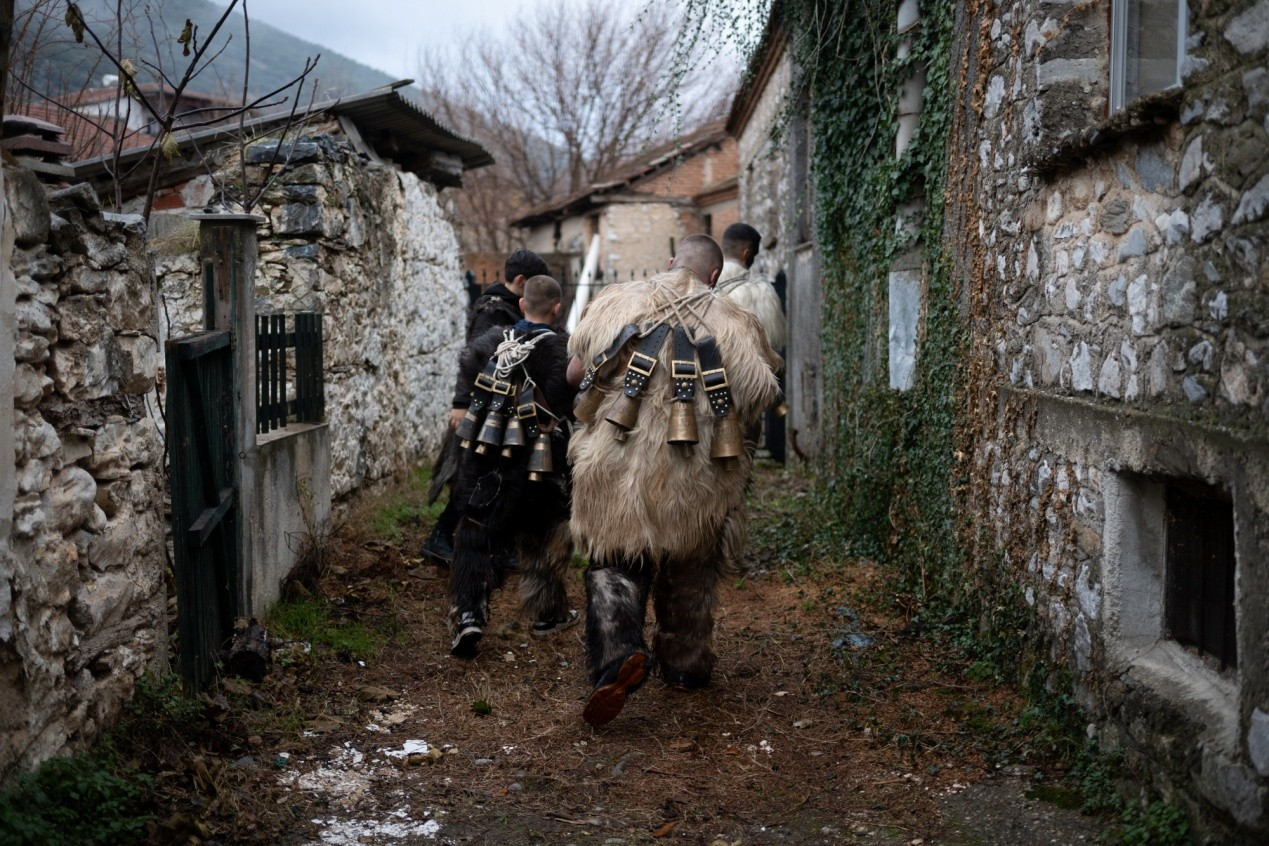
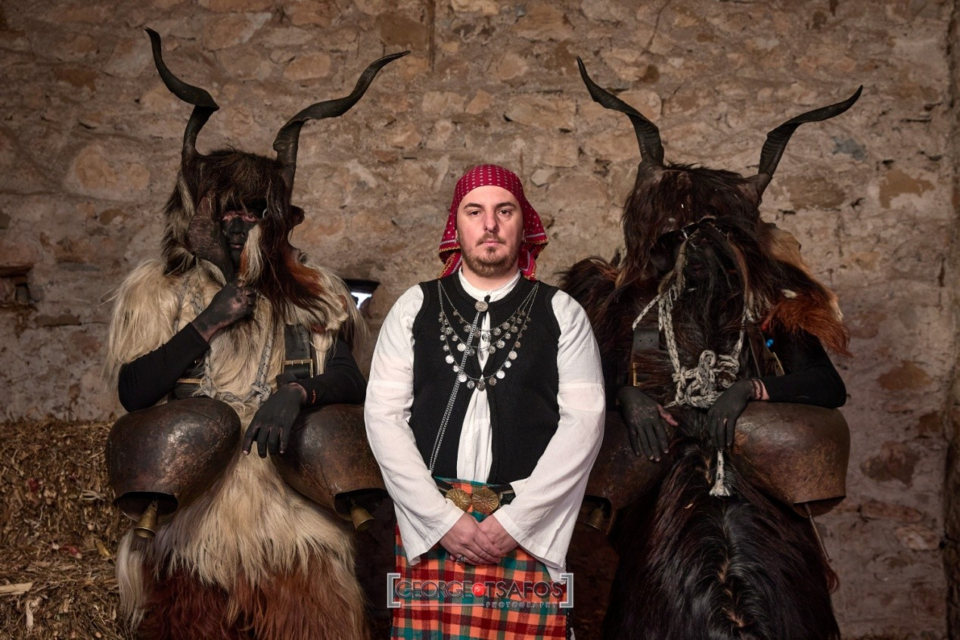
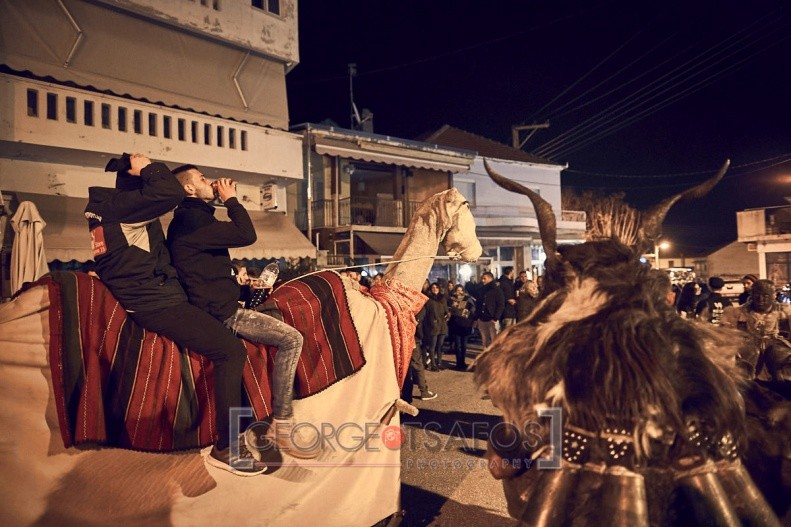
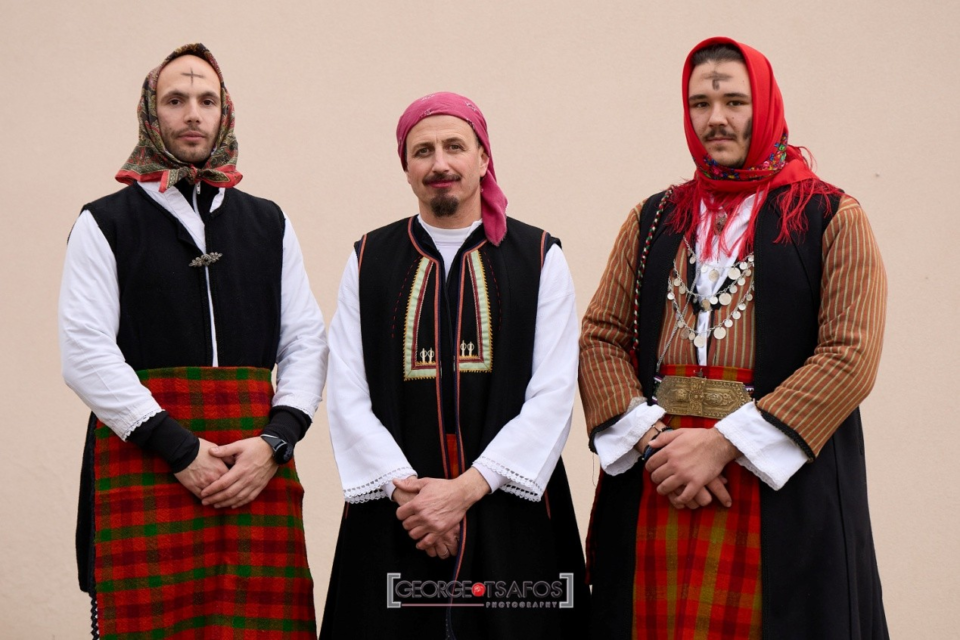
The symbols of Babiden are as striking as its music. A camel effigy parades through the crowd, drawing laughter, while masked figures bring a theatrical, almost Dionysian energy: the “koudounia,” the “prassoforos,” and the “igkilinka” (the bride) are at once comic and deeply symbolic. And, of course, wine flows generously, shared from hand to hand, sealing the sense of camaraderie.
It is believed that the satirical figure of “koudounia” uses the bells to shake the world and drive away evil. Others suggest that it tries to awaken the Earth from its winter sleep. As for the face paint, again, its exact meaning is unclear. Some say it was to conceal their identity from the Turks, others see it as a remnant of the Roman era since the festival took place during the Kalends of the god Janus, some consider it survives from ancient Greek times, and others simply describe it as a grotesque carnival element. There are no sources that provide precise documentation. The same ambiguity in interpretation is also observed in the figure of the camel effigy. A sense of fluidity can be observed in the overall interpretation and performance of the practices of Babiden.
What makes Babiden truly unique is this fluidity. This is not a static ritual preserved in a museum-like fashion. It changes constantly—shaped by the mood of the participants, by the weather, by migration, even by technology. Sometimes the celebration feels exuberant and wild; other times more intimate and subdued. This dynamism is what has allowed Babiden not only to survive but to thrive across generations.
For visitors, Babiden is far more than a folkloric show. It’s an immersion into a way of life where community takes precedence over individuality, where music and dance become a universal language, and where the past and present blend seamlessly. Babiden is also a reminder that traditions are living processes that adapt and evolve with the people who carry them.
When the last echoes of the lyra fade and Petroussa’s streets return to being quiet, Babiden does not end. It continues in stories told around kitchen tables, in memories relived, and in anticipation of the year ahead. That, perhaps, is its greatest magic: the ability to keep a community connected, to inspire joy, and to prove that tradition can be more alive than ever.
Since its establishment in 1976, the managing body of the Babiden custom has been the Cultural Association of Petrousa. Through the Association’s initiatives and continuous efforts, in 2025 Babiden was inscribed in the National Inventory of Intangible Cultural Heritage of UNESCO.
Facebook: Πολιτιστικός Σύλλογος Πετρούσας Δράμας
Instagram: politistikos_syl_petrousas
Email: [email protected]