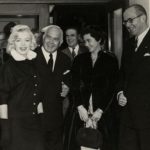

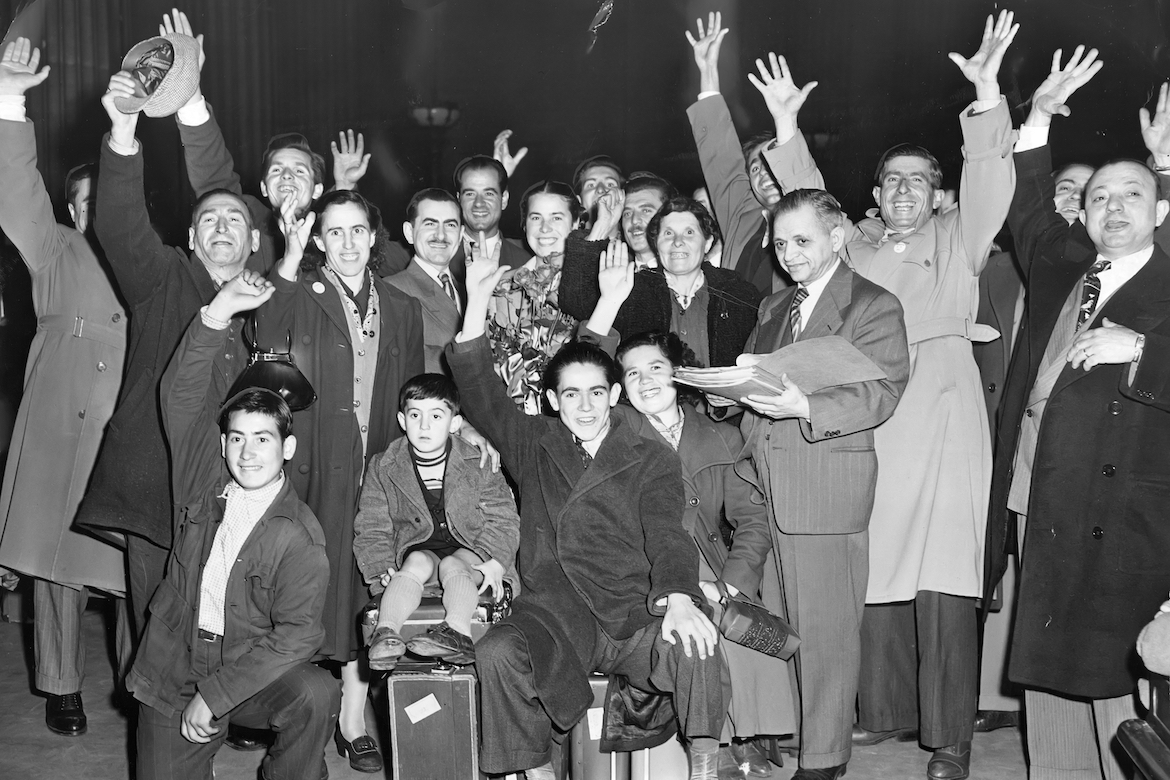
It was March of 1951 and became front page news in the local newspapers— The Chicago Daily Tribune and the Chicago Sun-Times— which both carried stories and a photo from a joyous scene at Union Station of the first refugees arriving in the city from war-torn Greece.
The arrivals, known then as “displaced persons,” came from throughout Greece’s countryside, ravaged by the Nazi occupation during World War II and by a brutal civil war that lasted well into the late 1940s.
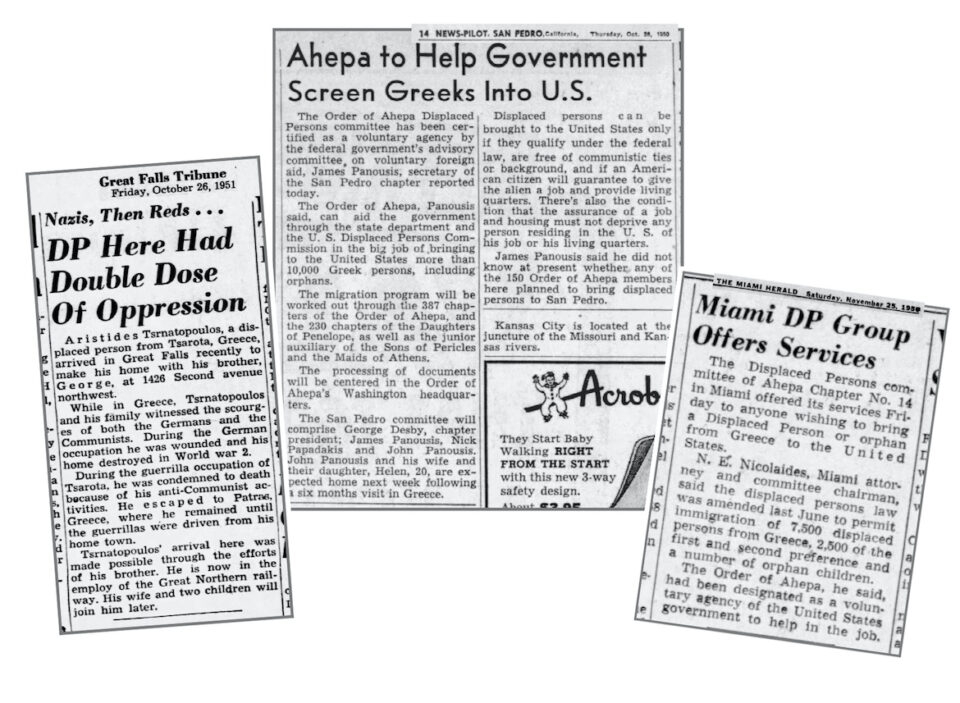
The Order of AHEPA was designated by the United States government to undertake the daunting task of finding homes and integrating the thousands of Greek arrivals, which it did expeditiously and with great fanfare.
Committees were established in large cities throughout the nation to place adults and children alike, who were arriving in the country by the planeload. Elaborate welcome ceremonies were planned that sought to promote the goodwill of the United States in welcoming the Greeks.
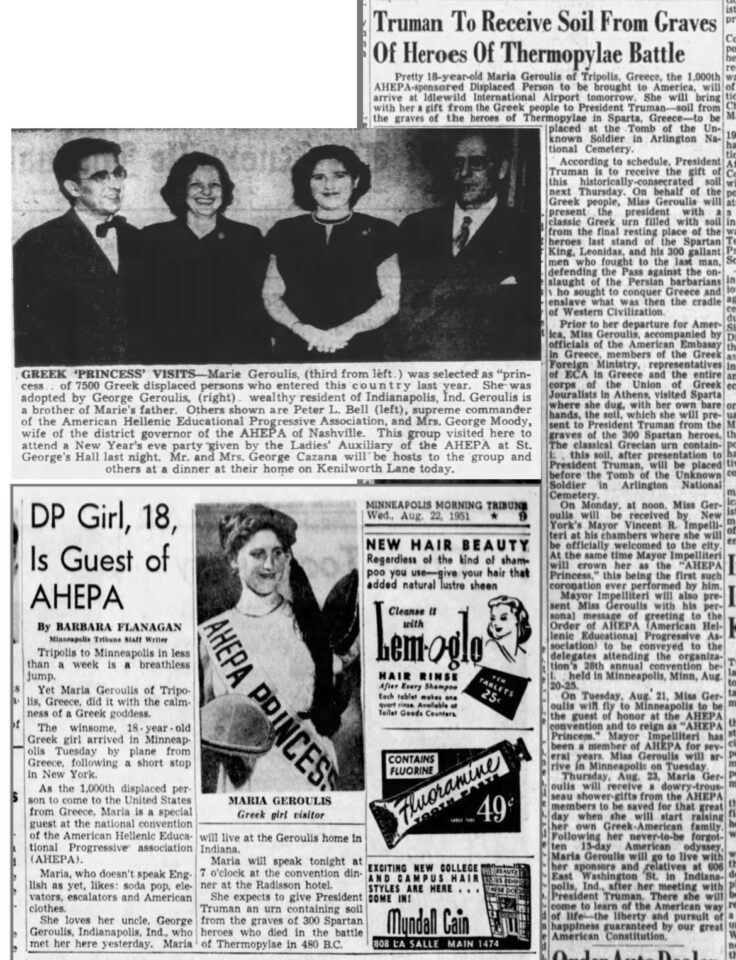
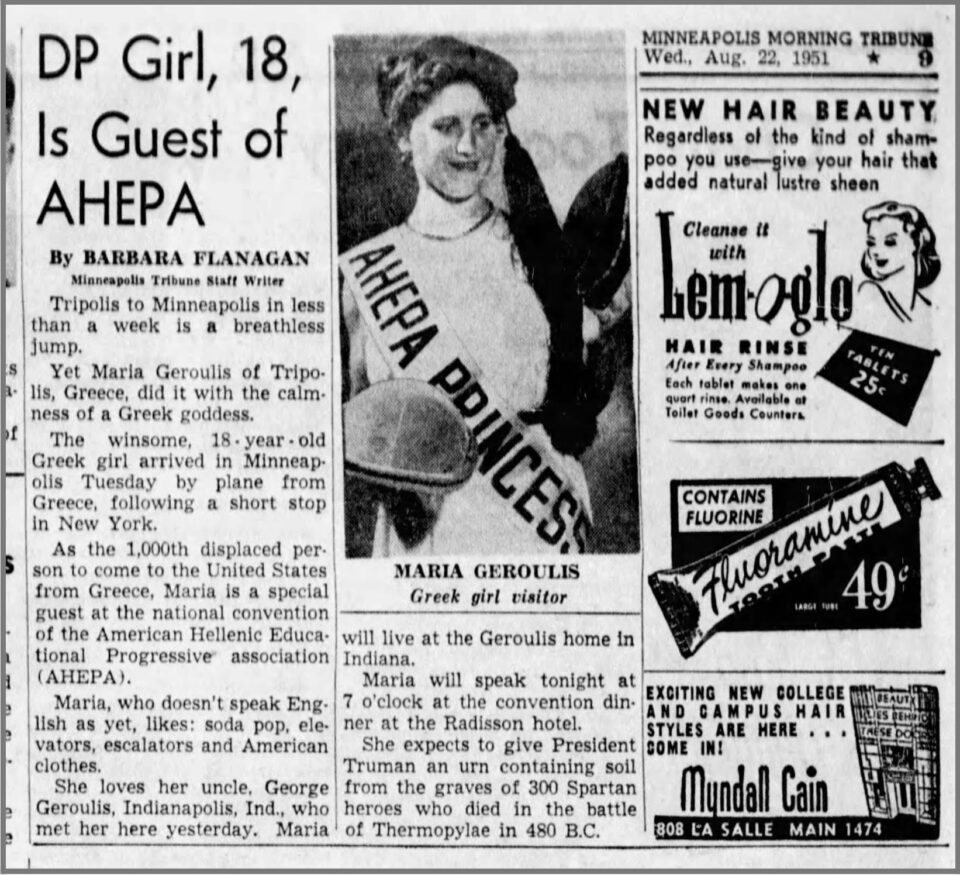
In Minneapolis, an 18-year-old girl named Maria Geroulis from Tripoli in the Peloponnese, the 1000th displaced person to arrive from Greece, brought with her an urn that contained “sacred soil” from the grave of Thermopylae. It was presented to President Harry Truman.
Geroulis was dubbed a “Queen” by AHEPA and she was used as an example of the Displaced Person’s story and how her family came from hardship and war to find opportunity in the United States.
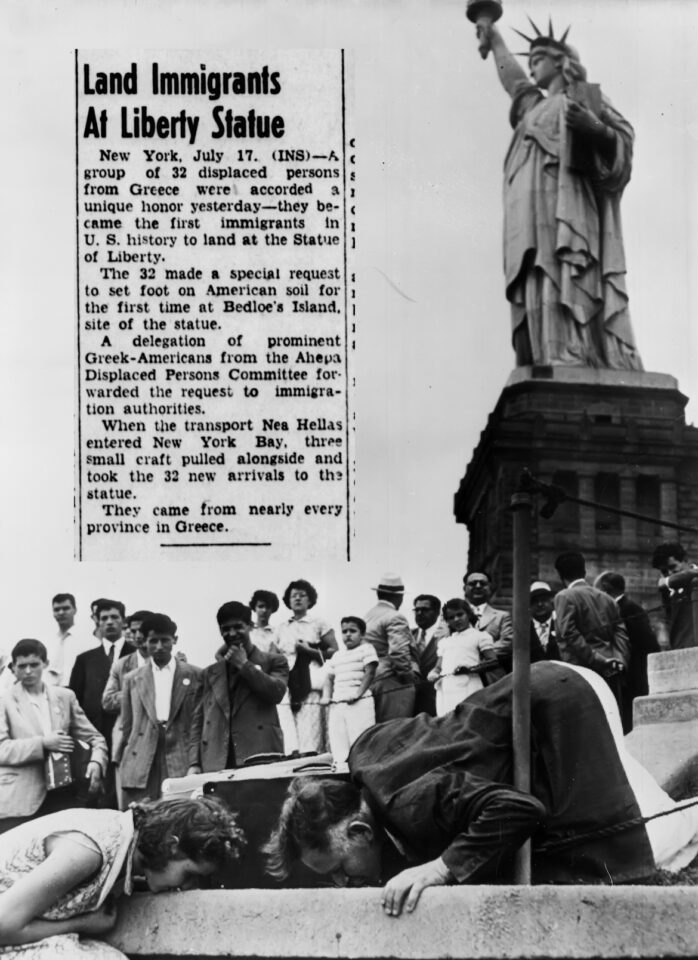
While in New York City in July 1951, AHEPA planners organized an elaborate welcome ceremony at the Statue of Liberty for 32 Greeks who were arriving on the vessel Nea Hellas at the port of New York City. The event was historic and symbolic because the Greeks were the first immigrants in U.S. history to land on the island, called Bedloe’s Island then, which was home to the iconic statue that symbolized the American dream that immigrants were coming to achieve.
An iconic photo of arriving Greeks kissing the ground ran in dozens of American newspapers.
And in Chicago, where thousands of Greek displaced people arrived during the early 1950s, a welcome ceremony was planned at Union Station by the local AHEPA committee which made headlines in the mainstream press.
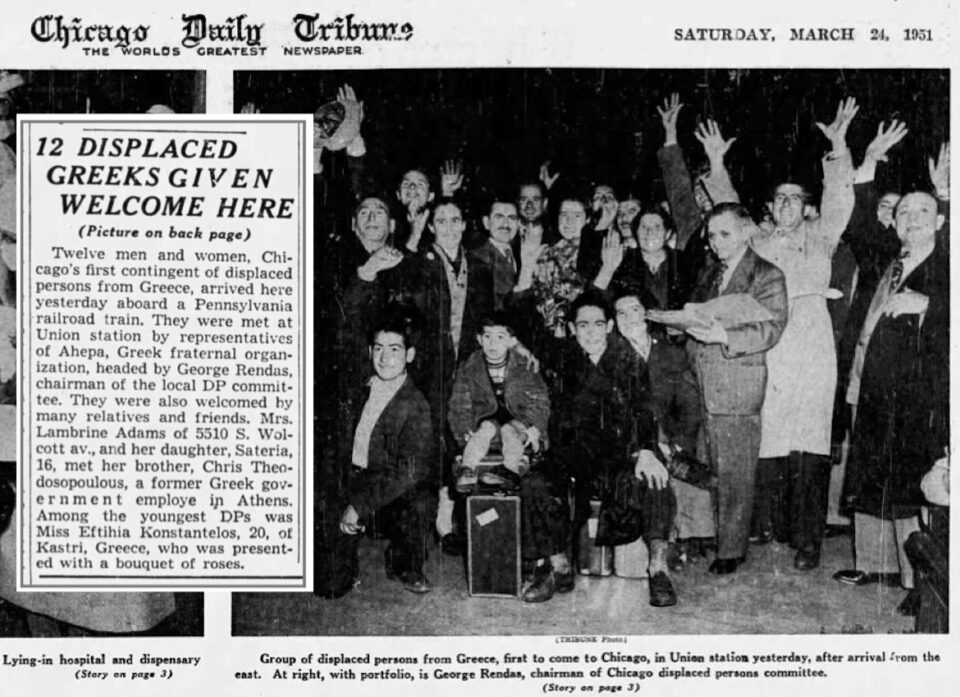
While some of the newly arrived Greek refugees, or DPs, had family members they could live with which could her them start their new lives in the United States, many were orphans. Newspaper accounts from the early 1950s are abundant with references to local committees in various U.S. cities holding fundraisers to cover expenses of the new arrivals.
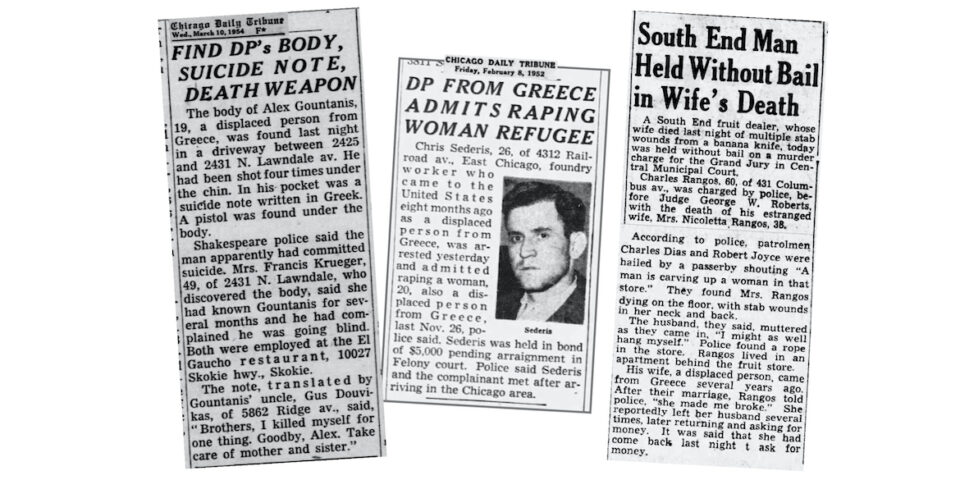
Although newspaper stories were plentiful about the new Americans learning English and becoming model citizens, like this one from the Akron Beacon Journal in Ohio, discrimination was rampant and the label “displaced person” or DP became a derogatory term, even in the media, which continued to point out a displaced person’s status as one, especially when crime was involved.
The Greek arrivals were part of a much larger mass of hundreds of thousands of war refugees from all corners of Europe that began arriving in the United States following the passing of the Displaced Persons Act of 1948, and subsequent amended laws in 1950.
The first bill was passed by Congress in 1948 and reluctantly signed by President Harry Truman— not because he was against letting refugees in, but because the bill carried roadblocks and technicalities that restricted millions of European Jews from qualifying, as well as refugees from Southern Europe including Greece and Italy.
Upon signing the amended act in 1950— which effectively allowed more than 10,000 war-stricken Greeks to enter— Truman spoke of his reluctance to sign the first bill, but also his decision to do so since it would pave the way for the opening of the refugee conversation and America’s need to be more inclusive.
“When I reluctantly signed the Displaced Persons Act of 1948, I did so in spite of certain of its provisions which imposed unworkable restrictions and resulted in unfair discriminations,” Truman said at the signing ceremony on June 16, 1950. “Nevertheless, I felt it was necessary to make a start toward a resettlement program for these victims of totalitarianism who yearned to live as useful citizens in a free country.”
Truman went on to mention the Greeks and other ethnic groups, specifically, who had been excluded in the first bill and would now be welcomed into the United States thanks to the amended version that dropped many of the ethnic and religious restrictions that were included in the 1948 version.
Truman said: “I am also glad that the new act wisely and generously extends opportunity for immigration to the United States to additional groups of deserving persons who should make fine citizens. Special provisions are made for 10,000 war orphans from the free countries of Europe and for 4,000 European refugees who fled to the Far East to escape one form of totalitarianism and must now flee before a new tyranny. Eighteen thousand honorably discharged veterans of the exiled Polish Army, who were given temporary homes in England after the war, will now have an opportunity to settle permanently in the United States. Ten thousand Greek refugees and 2,000 displaced persons now in Trieste and Italy will also have an opportunity to immigrate to the United States. Provision has been made for the admission into this country of 54,744 refugees and expellees of German origin. In all, the amended law authorizes a total of 400,744 visas, including the 172,230 which have been issued up to May 31, 1950.”