
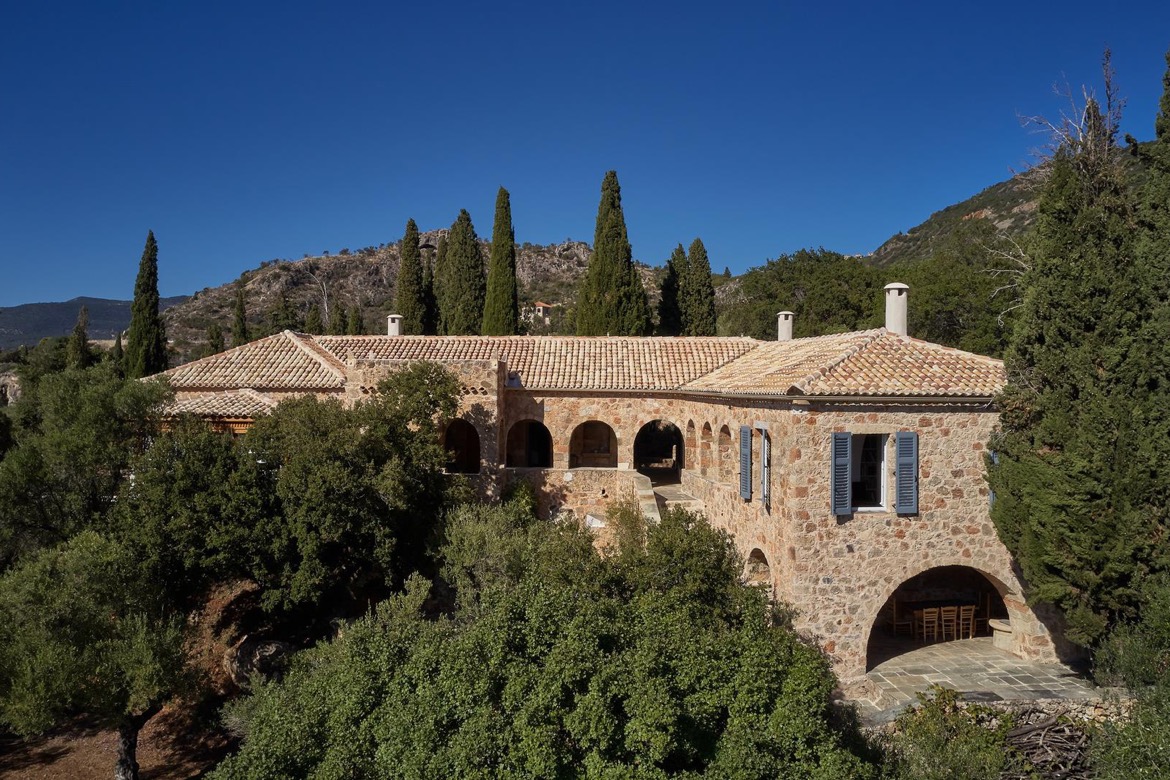
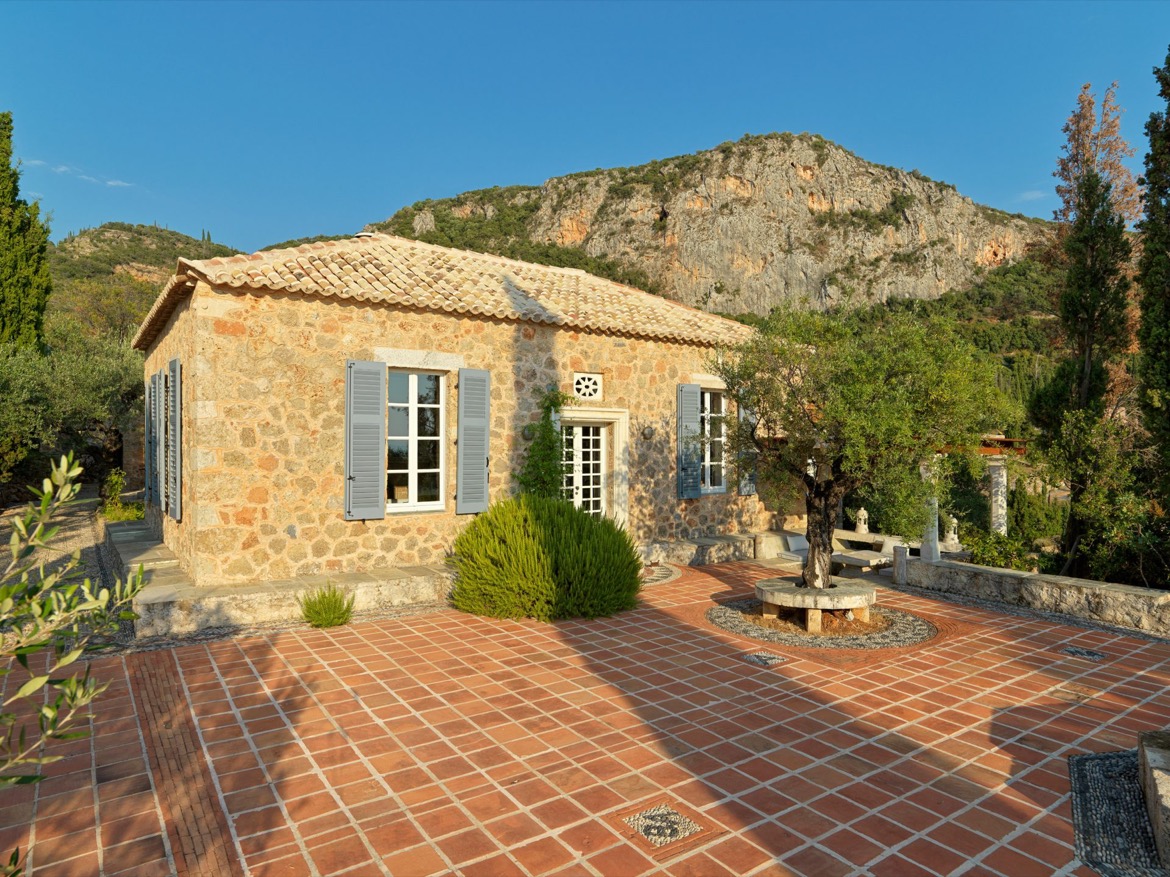
On a wooded slope outside Kardamyli, three stone buildings descend through cypress, olive trees, oleanders and wildflowers toward the sea. They do not present themselves as a monument. That may be precisely why the place feels so closely connected to the man who made it.
The Patrick and Joan Leigh Fermor House was conceived as a home, not as a memorial to a famous writer. Its later life—as a cultural property, a place for scholars and a residence periodically opened to guests—grew from the intentions of Patrick and Joan themselves.
A life redirected toward Greece
Patrick Leigh Fermor, universally known as Paddy, was born in 1915. His official biography at the property describes him as an author, scholar, decorated war hero and one of the finest travel writers of his generation. During the Second World War, he served with the British Military Mission to Greece and played a prominent role in the Cretan resistance.
By the 1960s, Patrick and his wife Joan had chosen Kardamyli as the place where they would build a home and spend the rest of their lives. The decision placed them in Mani, a landscape whose stone, mountains and austere settlements became inseparable from his writing about Greece.
The house that emerged was neither an imported villa nor an imitation of a tower. Built in local stone, its long, low forms, tiled roofs, shaded arcades and courtyards sit within the contours of the site. Three principal buildings make up the property: the Main House, with three suites; the writer’s studio, now known as the Traditional House; and a separate Guest House.
A house meant to outlive its owners
In 1996, Patrick and Joan donated the property to the Benaki Museum. Their expressed wish was that it should remain open to the public and provide a place where researchers and intellectuals could work in an inspiring setting.
That intention still shapes the house’s unusual program. The Benaki Museum operates visits, educational activities, events and fellowships at the property. During the summer rental period, public access continues through a scheduled weekly visit. For three months of the year, the museum is also permitted to rent the house, with hospitality services provided by Aria Hotels.
The arrangement prevents the house from becoming frozen in a single identity. It is part museum, part working retreat and, for a limited period, a residence again. Up to ten people can occupy the three buildings together.
The details that keep a personality present
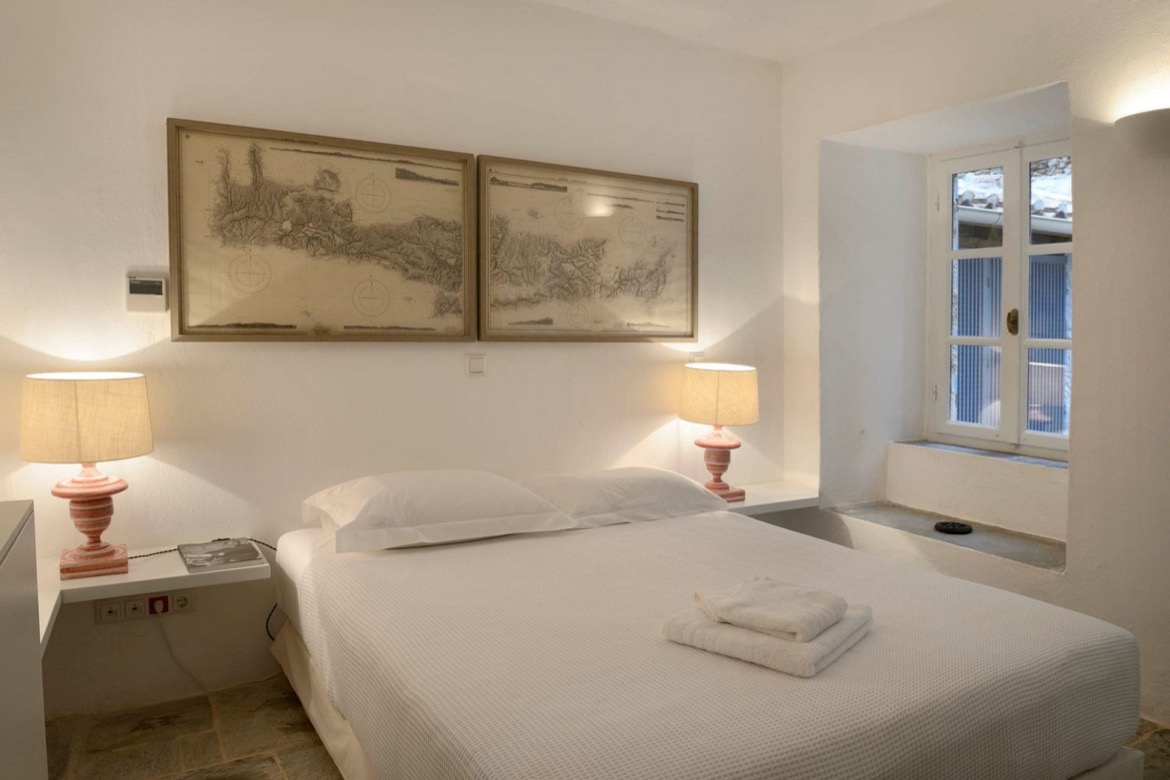
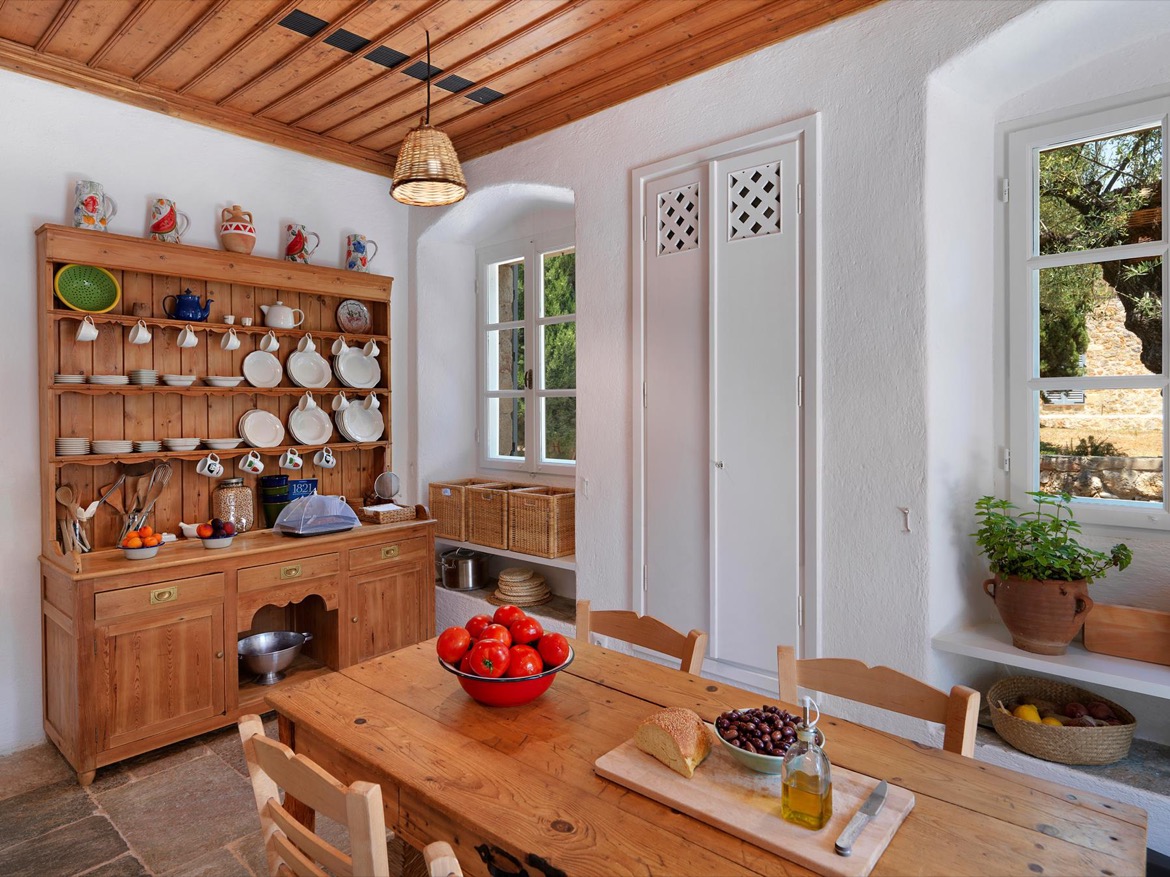
The strongest sense of continuity comes from ordinary objects and rooms rather than plaques. Patrick’s private book collection and writing desk remain in the library. In the kitchen, open shelves, wooden furniture, ceramics and the tools of domestic life resist the anonymous polish often imposed on famous houses.
Even the hospitality offered there refers back to its former owner. The property’s dining program includes dishes identified as Patrick’s favorites, served in the dining room or on the stone veranda. The point is not to reenact his life. It is to keep the building connected to the habits that once animated it.
The Greece he put on the page
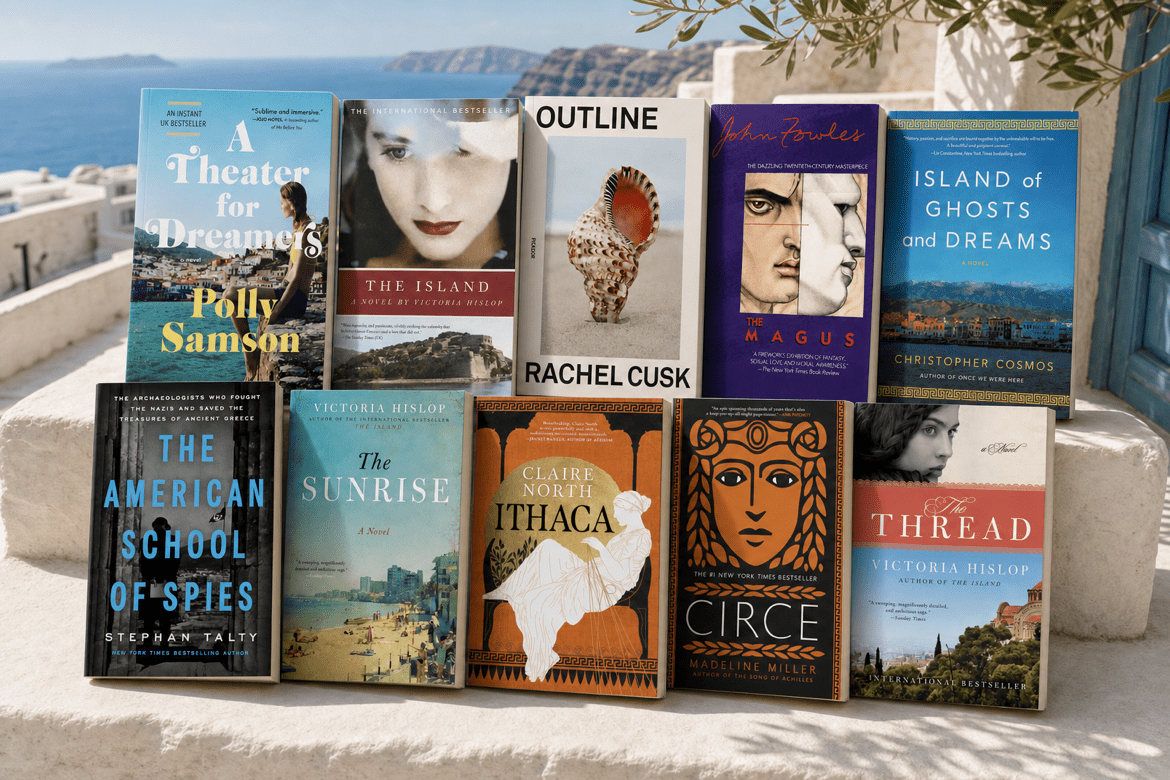
The house and the books are difficult to separate. Mani: Travels in the Southern Peloponnese, first published in 1958, moves through the remote peninsula where Patrick and Joan would eventually make their home. It is not a conventional guidebook. Leigh Fermor shifts between landscape, history, local lore and encounters with the people he met, treating the region as a place where the past remained embedded in daily life.
Its companion volume, Roumeli: Travels in Northern Greece, turns northward. The old geographical name does not appear on modern maps, but for Leigh Fermor it opened a route through communities and traditions rarely encountered by outsiders: Sarakatsan shepherds, the monasteries of Meteora and Missolonghi, where a search for a pair of Byron’s slippers becomes one of the book’s memorable digressions.
A different Greece appears in Abducting a General: The Kreipe Operation in Crete. Leigh Fermor’s account follows the 1944 operation in which he and a resistance team captured German commander Heinrich Kreipe on occupied Crete. The volume also includes his wartime intelligence reports, written while the Allied officers and their Cretan partners were operating from mountain hideouts. Read together, the three books show why the Kardamyli house feels less like the end of his travels than a place from which a lifetime of attention to Greece could continue.
The attraction of the Leigh Fermor House is not that it resembles every romantic idea of Greece. It is that one particular couple chose one particular landscape, built carefully within it and then arranged for the result to become something larger than a private inheritance.
The house survives not only because its stonework was preserved, but because its purpose continues to evolve. Writers still work there. Visitors still cross its threshold. People still sit beneath its trees and look toward the water. Patrick Leigh Fermor’s Greece is present in that continuity—not as nostalgia, but as a living place.