
The following editorial was submitted by Stavros and Nikolaos Piperis, two brothers who live in Omaha, Nebraska, in response to an editorial we published on January 2 from prominent church leader and philanthropist Mr. Nick Karakas. The opinions expressed may not necessarily belong to The Pappas Post.
Mr. Nick Karakas, a philanthropist and prominent member of the Greek Orthodox Archdiocese of America, has offered a set of proposals to help our church succeed in the future.
We also want the Church to succeed, but we do not believe his proposals will help.
Mr. Karakas proposes that bishops be required to resign at 75 years old to make way for younger clergy who, with their “social and technical savvy,” will be more capable of leading a diocese. While we need engaging leaders, we disagree that the elderly should be excluded. Archbishops Athenagoras and Iakovos served into their mid-80s, a decade longer than this rule would allow. Should they, on their 75th birthdays, have been forced to resign? Don’t some spiritual gifts, like wisdom, ripen with age?
“It is time to bring Christ back to the present age and center of Orthodoxy in our sermons,” Mr. Karakas writes. “Let us acknowledge that Christ is here today… This even as we revere our early church fathers, saints, apostles and faithful forbearers.”
He seems to suggest that our reverence for our church fathers, saints and apostles may be distracting us from Christ. But we are revering them because it is they who help us acknowledge Him. At the end of each liturgy, we ask the saints to intercede for us, not move aside.
Mr. Karakas proposes revision of church school teaching methods, in part because our faithful, he claims, are “generally skimpy on Bible passages.” But he should remember that our church fathers blended Bible passages with music and iconography for us to understand their meaning through art.
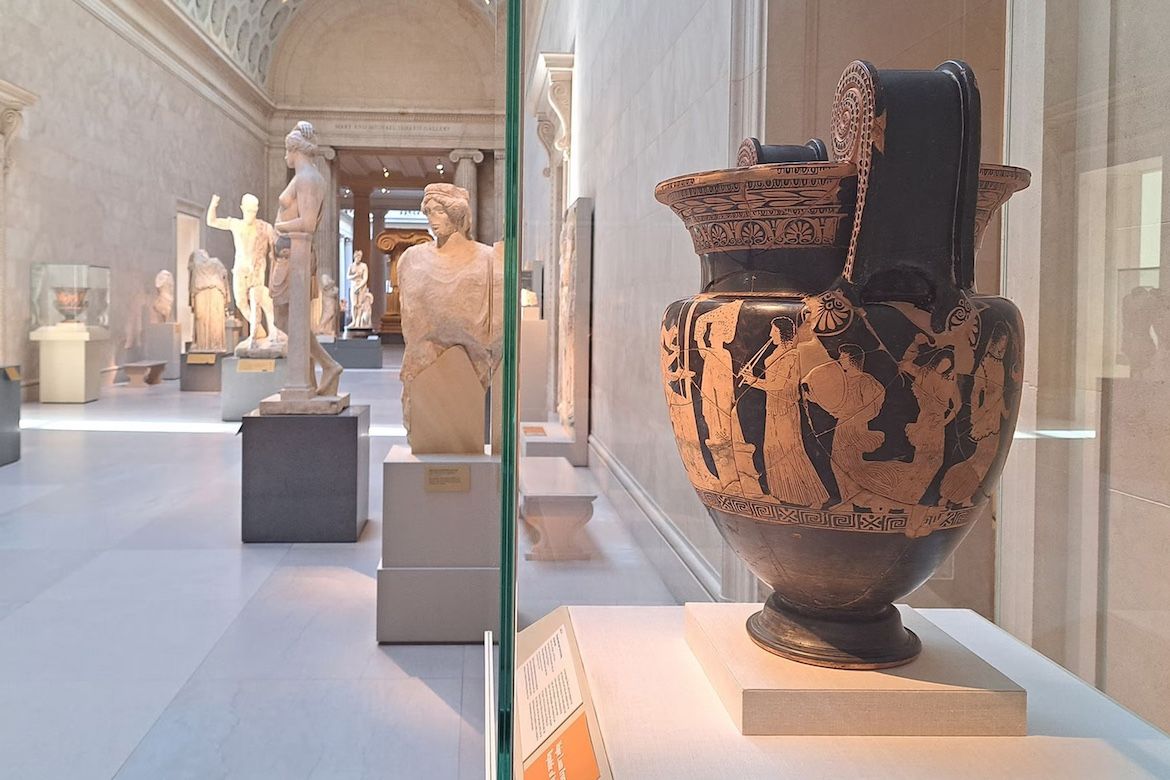
“Icons teach their beholders with a silent voice” and “through the beauty of music, we unawares receive the meaning of the words.”
The Complete Works of St. Basil the Great
Our communities’ knowledge of hymns and icons is not “skimpy.” Church schools should continue to teach the Bible through these.
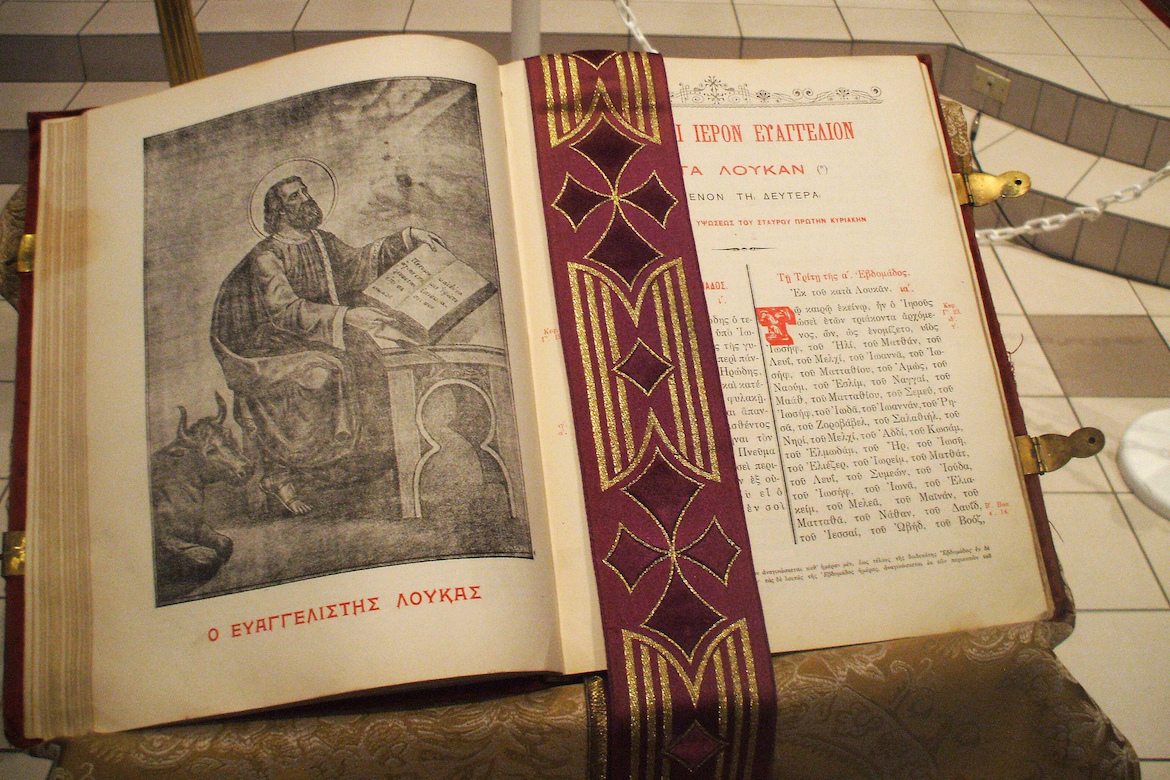
Finally, Mr. Karakas writes, “[The Greek language] has helped and served our wonderful parents and grandparents well.” We would add that it also served the Evangelists well. “But today,” he says, it “stands as one of the many barriers to the faithful and must be curtailed or eliminated entirely.”
In chapter 21 of John’s Gospel, Christ asks Peter if he loves Him. The first two times, Christ uses the word “agape” — unconditional love — but Peter responds using only “filia” — friendly love. The third time, Christ asks using “filia,” too, humbly accepting that “filia” is all Peter will give Him. In leading translations, and even in the Orthodox Study Bible, only “love” is used. The distinction between “filia” and “agape,” which illustrates the struggle of Peter and the humility of Christ, is lost in translation.
While Mr. Karakas believes that the Greek language is a barrier, it is actually the opposite. As this passage shows, the Greek language is a gateway to Christ — a gateway chosen by the Evangelists and the Apostle Paul. The church should continue to use it.
While we appreciate Mr. Karakas’s offer of proposals, we respectfully disagree with them.
Stavros and Nikolaos Piperis, Omaha, Nebraska
Nikolaos Piperis is a graduate student studying philosophy at Boston College. Stavros Piperis is a senior undergraduate student studying political science at Boston College and co-president of the university’s Hellenic Society. Both brothers are members of St. John the Baptist Greek Orthodox Church in Omaha.