
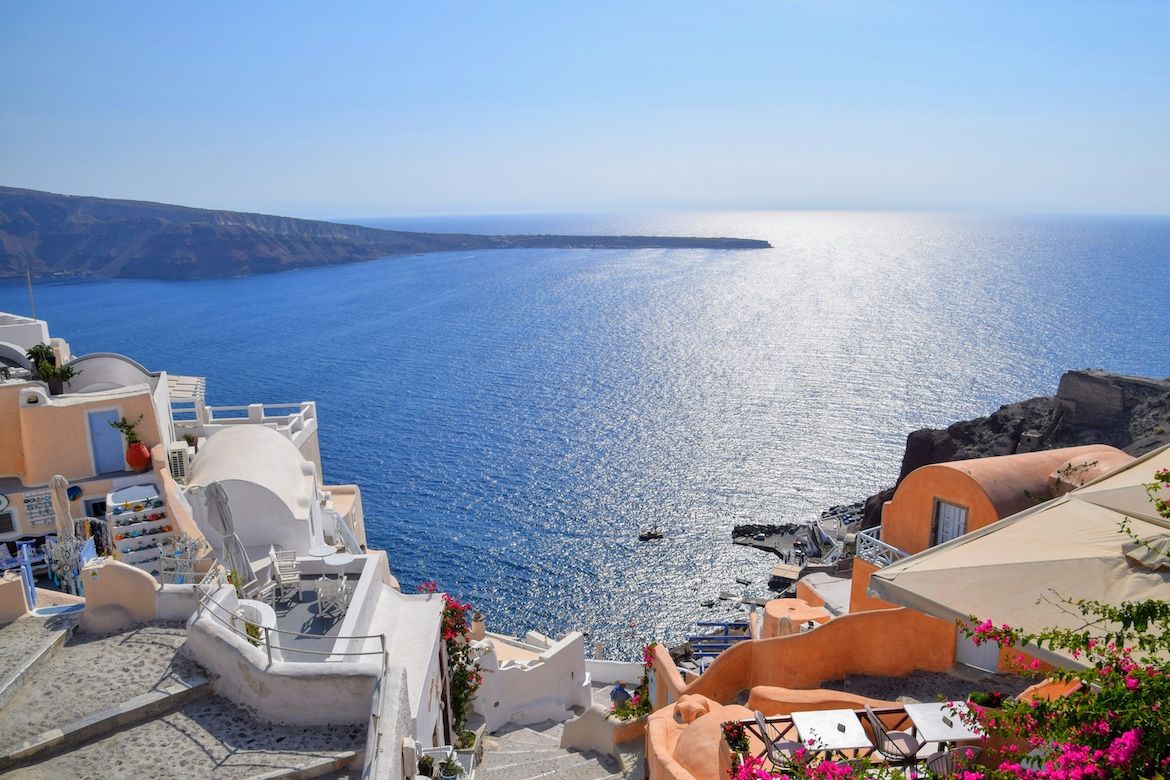
A spike in seismic activity has raised concerns of a potentially powerful earthquake on the Greek island of Santorini, prompting government officials to place the island on high alert. Hundreds of residents and travelers have already evacuated the island as a preemptive safety measure, while the U.S. Embassy as well as other foreign offices have issued rare natural disaster warnings for their residents.
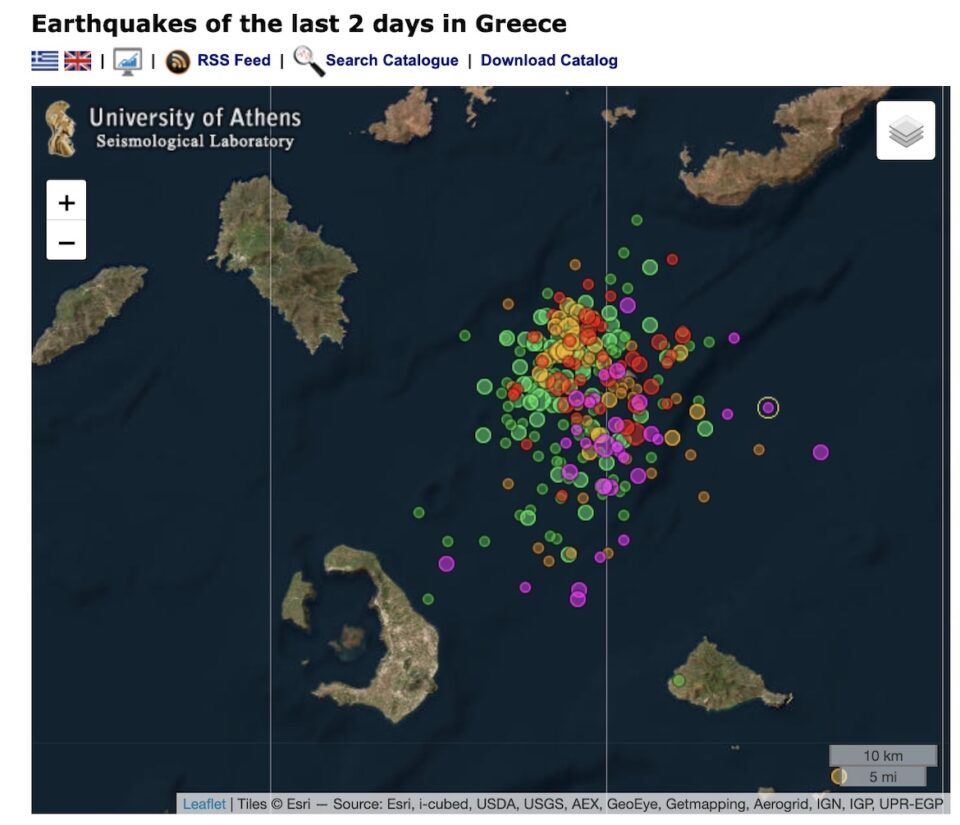
More than 200 tremors were recorded over the weekend in the Aegean region between Santorini and Amorgos, according to the Ministry for Civil Protection in a statement on Sunday, February 2. Tremors reached magnitudes of up to 4.9 on the Richter scale in the northeast of Santorini on Monday.
A screenshot from the University of Athens Seismological Laboratory which shows live seismic activity reveals the increase in activity in the region.
As a precaution, schools were closed and emergency crews were deployed to Santorini on Monday.
The US Embassy in Greece released a natural disaster alert for US citizens on Monday.
“Following increased seismic activity, the Greek Ministry of Climate Crisis and Civil Protection has issued advice for Amorgos, Santorini (Thira), Anafi, and Ios, including not to attend large indoor gatherings and to avoid old or abandoned buildings,” the alert says. “Additionally, the Greek Ministry of Climate Crisis and Civil Protection advises people to avoid the ports of Amoudi, Armeni, Korfos, and Old Port (Paleos Limenas) in the area of Fira, and to choose safe routes when traveling, particularly in areas where the landslide risk is high. In case of a strong tremor, people should immediately depart coastal areas.”
Santorini is no stranger to earthquakes and volcanic eruptions, with evidence of historic activity dating back many millennia. The most destructive earthquakes in living memory were those of July 1956, which struck south of the island of Amorgos. Measuring around 7.5 on the Richter scale, the largest earthquake was followed by several tremors. Public buildings were destroyed, older homes were reduced to rubble, and more than 50 people died.
In January of 1928, following similar earthquake activity, Santorini’s volcano erupted, sending ash into the air for thousands of miles.